
Nigeria’s New Tax Regime: A Counterpoise to Cashless Economy and Financial Inclusion?

By Marcel Okeke
For upwards of a decade-and-half, the Central Bank of Nigeria (CBN)
has been implementing the financial inclusion and cashless economy
initiative. Introduced in 2011, the policy aimed to reduce physical cash
circulation, promote electronic transactions, and increase financial
inclusion—by increasing adult Nigerians’ access to payment services.
From about 21 per cent of adult Nigerians in 2010, the CBN’s financial
inclusion efforts have raised the level to about 74 per cent (legit.ng) as
of mid-2025, and aims to achieve 95 percent by 2030. Apparently, this
has become part of Nigeria’s broader vision to become a US$1 trillion
economy by 2030. In pursuit of this, the CBN has continued to focus on
strengthening digital channels, deepening credit access, and supporting
underserved groups, particularly women, youth, and the micro, small
and medium-scale enterprises (MSMEs).
Ironically, however, the pivotal role of banks in the computation and
extraction of taxes, duties and charges under Nigeria’s new tax laws
(effective January 1, 2026) now seem to pose a threat to the pursuit of
the lofty objectives of financial inclusion and cashless economy
initiative. This is because under the new tax regime, it is believed
(rightly or wrongly) that all monies that run through any bank account
must attract one or several forms of taxes, duties or charges.
Specifically, there are transfer fees: ten naira for transactions below five
thousand naira; N25 for transaction between five and fifty thousand
naira; and N50 for transactions above fifty thousand naira. There is also
stamp duty of N50 on electronic transfers above ten thousand naira.
There is also value added tax: 7.5 per cent on electronic banking service
charges, such as POS charges, USSD sessions, and mobile transfers. To
all these would be added a cybersecurity levy, which varies based on
transaction amount; and then, the SMS notification fee—six naira per
SMS for electronic transfer notification.
In the build-up to the implementation of the new tax laws, so many
unprecedented developments took place, including the discovery of the
existence of different versions of the laws. The globally renowned tax
and management consulting firm, KPMG, “flagged several concerns
with the tax laws, citing errors, inconsistencies, gaps, and omissions”
that could affect businesses and taxpayers.
Although the Federal Government’s tax authority has ironed out the
spotted flaws “behind closed doors” with the leadership of the
consulting company, the Nigerian public remains in the dark about the
details of the outcome. Till date, relevant committees of the National
Assembly are yet investigating the varieties and extent of alterations in
the tax laws. Even as the Federal Government goes ahead with the
implementation of the laws, some stakeholder-groups are still calling
for their suspension, meanwhile.
The latest group—Catholic bishops in Nigeria—have called for a delay
in the implementation of the new tax laws “due to lack of public
awareness, potential for increased hardship on the poor, and need for
transparency, fairness, and visible government accountability.”
Stressing that reforms must have a “human face” and not burden
struggling citizens further amidst inflation and poverty, the clerics
emphasized the need for better education on the reforms, stakeholder
dialogue, and assurance that tax revenue will genuinely improve
infrastructure and services, rather than fuel corruption.
In point of fact, owing to the uncertainty and confusion engendered by
the alterations in the tax laws, the Federal Government was unable to
issue the necessary guidelines for the implementation of the new tax
laws. Taiwo Oyedele, Chairman of the Presidential Tax Reform
Committee disclosed this during the 2026 Economic Outlook event
hosted by the Institute of Chartered Accountants of Nigeria (ICAN) in
Lagos. Oyedele revealed that he had to instruct the Nigeria Revenue
Service (NRS) and the Joint Revenue Board (JRB) to delay the
implementation of the laws “until clarity is achieved.”
Oyedele told his audience about how his team attempted to purchase
official printed copies (of the new tax laws) from the government
printer but was told by staff that all copies had been taken by the
National Assembly, “which restricted public access until their review is
complete.” The National Assembly, however, is preparing its own
gazette that has yet to be finalized.
But, bent on inaugurating the new tax regime, the Federal Government
has kept muddling its way through, with or without the necessary
guidelines, and adequate dose of public education and enlightenment.
As a result of this, largely bereft of the true letters and spirit of the new
tax laws, divergent strata of the Nigerian public have been reacting to
the commencement of the laws in diverse ways.
Reports show that some businesses and traders have commenced
arbitrarily increasing the prices of their goods and services in different
parts of the country, attributing the hikes to the new tax laws.
Apparently due to lack of clarity as to the real contents of the new laws,
these businesses would rather opt to beat the laws, and rip off their
patrons and customers.
A plank of this tendency is the insistence of some businesses and
traders to deal only on “cash basis”—meaning that all payments for
their goods and services must be made in cash. This, they do, to avoid
any transactions showing in their bank accounts—which they
believe—are being monitored by the banks for tax purposes. Right or
wrong, this mindset is already gaining ground in several locations in the
country.
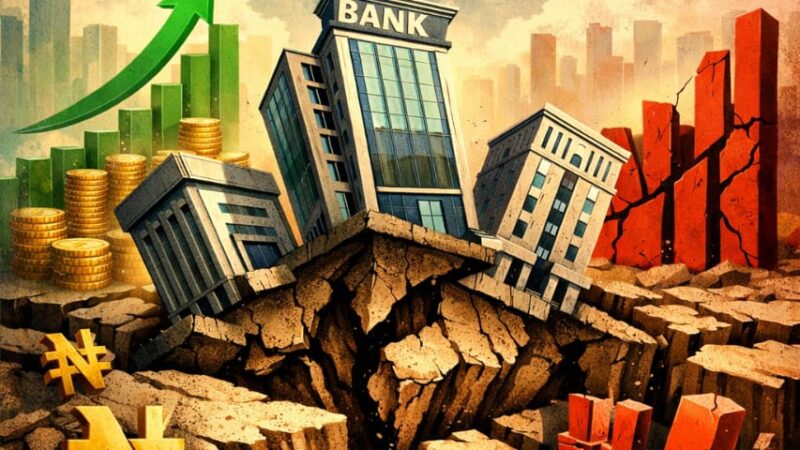
Should this perception linger, electronic and digital payments—the
pivots of cashless economy—could be stalled: becoming a real
counterpoise to financial inclusion and the cashless economy initiatives
of the CBN. In the face of pervasive ignorance about details of the new
tax laws, the banking public is getting scared stiff by fear of the
unknown. If things are not clarified expeditiously, Nigeria could
unwittingly return to a largely cash-based economy.
The fate of Pay-As-You-Earn (PAYE) Nigerian employees, particularly
pose some confusion under the new tax regime. Analysts argue that
since this class of taxpayers usually get their pay after the deduction of
appropriate taxes, their banks ought not to tax them in the course of the
utilization of their net pay. This raises the question: should these
taxpayers pay duties and charges for their internet banking and other
digital transactions? If they pay, will this amount to double or triple
taxation?
Again, for this class of taxpayers and their ilk, the temptation to ‘evade’
the taxes on electronic and digital transactions is becoming palpable.
Reports have it that many Nigerians are now opting to withdraw their
earnings as a lump rather than via several digital transactions that could
attract numerous charges. This, again, poses a real threat to financial
inclusion and cashless economy pursuits of the monetary authorities.
The author, Okeke, a practicing Economist, Business Strategist,
Sustainability expert and ex-Chief Economist of Zenith Bank Plc, lives in
Lekki, Lagos. He can be reached via: obioraokeke2000@yahoo.com
(08033075697) SMS only