
Nigeria’s 2026 Economic Outlook: So Foggy, So Cloudy, So Uncertain
By Marcel Okeke
One of the crucial steps in strategic planning is an assessment of the current situation: to know exactly where you are; and take proper note of what is working and what is not working. So, a look at the current situation of Nigeria only shows confusion; a crossroads kind of challenge in the polity.
Where the country is right now shows that come 2026, Nigeria shall be running three budgets concurrently; a very odd, unprecedented scenario. The National Assembly has already approved the repeal and re-enactment of the 2024 and 2025 Appropriation Acts. The revised 2024 budget stands at N43.561 trillion, while the 2025 budget is now N48.316 trillion, with implementation extended to March 31, 2026. To these two budgets will be added the proposed 2026 budget of N58.18 trillion.
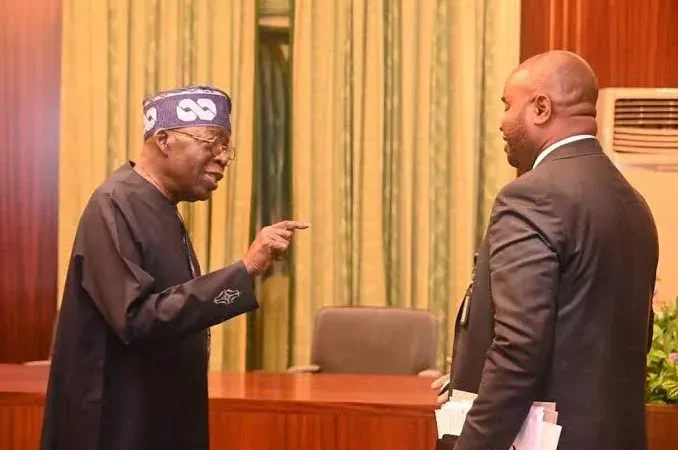
These, without any iota of doubt, vividly portray deep crises in the public finance profile and management of Nigeria. Clearly, the President Bola Ahmed Tinubu administration has been unable to create and fully run any annual budget in three years; it has only been able to draw the curtain on the 2022 and 2023 budgets of the ex-President Muhammadu Buhari-led administration. Nothing more!
The crises in Nigeria’s public finance management reached what looked like a climax in the process of the making of the 2026 budget. While the Budget Office of the Federation is domiciled elsewhere (formulating all the assumptions of the budget), the Ministry of Finance remains the ‘owner’ and ‘implementer’ of the budget. One of the upshots of the crises has been the rejigging of responsibilities in the Ministry of Finance, with virtually the supervision of all revenue-generating and collection duties now passed on to the Minister of State in the Ministry of Finance.
The entire ripples and implications of this new arrangement will play out in 2026. This will also be the time the much dreaded new tax laws shall come into effect. As is already well known, in an unprecedented event, several alterations have been detected in the tax laws as approved by the National Assembly. This has drawn the ire and public opprobrium, prompting the National Assembly to order a re-gazette of the tax laws.
At present, not a few stakeholders and civil society groups are calling for the suspension of the implementation of those laws. Indeed, an Abuja high court has commenced hearing on a suit seeking to stop the January 2026 implementation of the new tax laws that are scheduled to take off on January 1, 2026. Incorporated Trustees of a body known as African Initiative for Abuse of Public Trust (AIAPT) has dragged the Federal Government, President of Nigeria, Attorney General of the Federation, and the leadership of the National Assembly to an Abuja high court over the alleged alterations in the tax laws. The body is seeking for the suspension of the tax laws, among others.
On its part, the National Association of Nigerian Students (NANS) has also called on the Federal Government to immediately suspend the planned implementation of the newly introduced Tax Reform Law, citing poor public enlightenment and alleged alterations to the version passed by the National Assembly. NANS has announced January 14, 2026 as “a national day of action against the controversial law,” with plans underway to mobilize students nationwide “for a protest” in Abuja.
The Association of National Accountants of Nigeria (ANAN) has also urged the Tinubu-led federal government to withdraw the altered gazetted tax laws, and get them re-gazetted in their accurate, legislated forms. In a statement signed by its President, Hajia Zuwairat Talatu Kishimi, ANAN expressed concern over discrepancies between the tax laws passed by the National Assembly and versions later published in the official gazette.
ANAN warned that such inconsistencies threaten the rule of law and fiscal stability, describing the development as “a serious matter” that has created confusion among taxpayers, tax administrators, and professionals. “Once a bill has been passed and signed into law, any post-assent alteration, except through another legislative amendment, lacks constitutional validity,” ANAN said.
If the implementation of these tax laws get fully mired in a legal tussle (as the Abuja suit shows), it will automatically further imperil the revenue-generation and projections of the Government for 2026 and beyond. This will be against the backdrop of the already known revenue shortfall crisis of the Federal Government, which the Minister of Finance and Coordinating Minister of the Economy, Mr. Wale Edun disclosed not long ago. As he said, only N10 trillion out of the N40 trillion projected revenue for 2025 will be realized by the end of 2025.
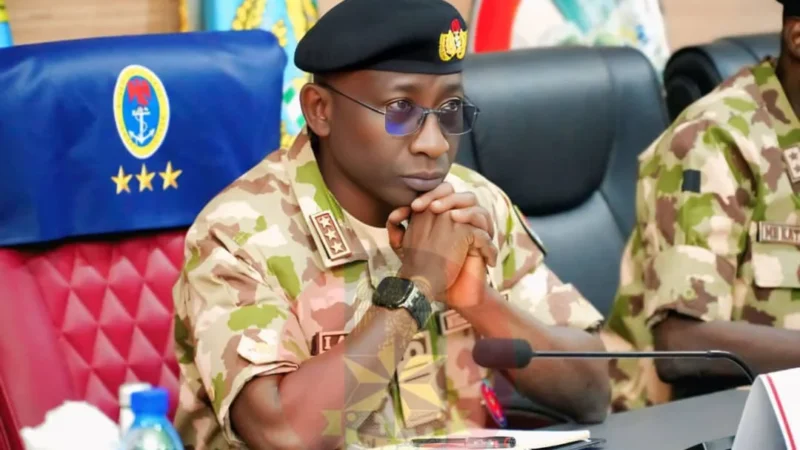
From another perspective, the intervention of the military of the United States of America to rout out the terrorists and insurgents in Nigeria, has created the impression and perception of the country being at war. Exactly on Christmas Day, December 25, 2025, the U.S. carried out airstrikes in northwest Nigeria. Although Nigerian officials have ascribed this to the collaboration between the U.S. and Nigeria, the global community is watching the development with bated breath.
Discerning investors, whether local or foreign, naturally have zero tolerance for social upheavals and wars in their investment destinations. And as the U.S. airstrikes are likely to happen more, and in various locations in Nigeria in the course of 2026, both local and foreign direct investors in the country are bound to be circumspect. Insecurity is an anathema to investment inflow anywhere.
It is in recognition of this reality that the Minister of Finance and Coordinating Minister of the Economy, Mr. Wale Edun, has been assuring investors that the recent “joint security operation” with the United States in Sokoto will not destabilize the markets, “but rather reinforce economic confidence.” In a statement on Sunday, December 28, 2025, Edun explained that the operation was intelligence-led and targeted solely at terrorist elements threatening national stability and communities.
Although Edun’s ministerial assurances seem to be coming at the nick of time, 2026 is already a victim of uncertainty engendered by the U.S.’s airstrikes in Nigeria and the lingering motley insecurity challenges of the country. While Nigeria is collaborating with the U.S. to rout the terrorists and their cohorts, the bandits, kidnappers, brigands, ritual killers, and human traffickers keep ravaging many parts of the country.
The optimism and projections of institutions like the Central Bank of Nigeria (CBN) regarding Nigeria’s economic outlook for 2026 do not hold much water. The apex bank has in its ‘Macroeconomic Outlook for Nigeria in 2026,’ projected the external reserve to hit US$51.04 billion in 2026; inflation rate to moderate to 12.4 per cent; and gross domestic product (GDP) to stand at 4.49 per cent.
Put differently, the CBN is only saying that it will continue with its tight monetary policy—which has practically scorched businesses, especially, the micro, small and medium-scale enterprises (MSMEs). Tight monetary stance that prompted attractive FGN Treasury Bills with high yields, has made credit go outside the reach of not a few local businesses.
The Manufacturers Association of Nigeria (MAN), the Lagos Chamber of Commerce and Industry (LCCI), the Employers’ Consultative Association of Nigeria (ECAN), among others, have complained for the umpteenth time about the asphyxiating cost of funds in the country. For upwards of two years now, the CBN has hiked the reference interest rate in the economy—Monetary Policy Rate (MPR)—to 27.5 per cent. Following this indicative interest rate, Deposit Money Banks (DMBs) put their lending rates at between 30-35 per cent per annum; thus making credit inaccessible and unaffordable to most private sector fund users. This only affords the CBN the opportunity to attract more foreign portfolio investors (FPIs)—to sustain some accretion to external reserves.
As for the rate of inflation, Nigeria has mastered the methods for attaining statistical targets, even if weakened purchasing power of the consumer keeps getting worse. After all, the inflation rate plunged from almost 35 per cent at end-December 2024 to 14.45 per cent in November 2025. So, the number can always be made to go down, even when the reality in the markets says otherwise. In 2026, too, electioneering funding by politicians can effectively ‘derail’ optimistic projections by the CBN and its ilk. 2026 is the ‘eve’ of the dreaded general election year—2027!
Nigerian election cycles show that politicians ‘import’ funds from wherever during pre-election years, and inject into the economy; and thus boost money in circulation. These usually laundered funds end up causing much distortions to the economy. And truth be told: such ‘illicit funds’ do not aid production nor create employments. It will therefore be presumptuous and unfounded for the CBN to be projecting a GDP growth of almost 5.0 per cent for Nigeria’s economy in 2026.
In the twilight of 2025, the organized labor under the aegis of the Nigeria Labor Congress (NLC) began indicating preparedness to commence another round of minimum wage ‘tussle’ with the Federal Government in 2026. It goes without saying that lingering hyperinflationary trend and the Government reform initiatives conspired to make nonsense of the current national minimum wage (of N70,000 per month) just hammered out less than two years ago.
All said, therefore, at this dawn of 2026, the outlook of the economy is only foggy, cloudy and uncertain. There is uncertainty about the new tax laws, more U.S. airstrikes and insecurity in the country; running three annual budgets concurrently; electioneering funding, and sticking with tight monetary policy. There could also be new minimum wage negotiations, with their socio-economic and political disruptions!
The author, Okeke, a practising Economist, Business Strategist, Sustainability expert and ex-Chief Economist of Zenith Bank Plc, lives in Lekki, Lagos. He can be reached via: obioraokeke2000@yahoo.com (08033075697) SMS only.