
Stakeholders task NIMASA on mandate amid reforms
 Maritime stakeholders believe the sector could see significant progress if the current Nigerian Maritime Administration and Safety Agency administration under Director-General Dr. Dayo Mobereola focuses primarily on fulfilling the agency’s core mandates rather than pursuing revenue, ANOZIE EGOLE reports
Upon assuming office in March 2024, Dr Mobereola inherited a sector burdened by legacy challenges, from training backlogs and regulatory gaps to an international reputation marred by security concerns and punitive insurance premiums.
Two years on, the agency has proven to be an emerging continental leader in maritime innovation, regulatory enforcement, and global advocacy. The agency has, through aggressive capacity development, strategic international diplomacy, and digital transformation, positioned Nigeria not just as a regional maritime power but as a model for African maritime governance in the twenty-first century. At the heart of NIMASA’s transformation is an unwavering commitment to developing Nigeria’s maritime workforce.
In a bid to boost morale in the sector, the agency has tackled the longstanding backlog in the Nigerian Seafarers Development Programme, clearing sea-time training delays that had frustrated aspiring maritime professionals.
In a bid to boost indigenous seafarers’ certification, NIMASA has integrated cutting-edge technology for verifying certificates of competency, streamlining the seafarer licensing process to meet the international standards of training, certification and watchkeeping for seafarers’ requirements. Recognising that institutional excellence begins at home, NIMASA has implemented comprehensive staff welfare programmes, including structured training initiatives, performance-based promotions, and reward systems.
Another milestone achieved by the agency within the last two years was Nigeria’s election into Category C of the International Maritime Organisation Council for the 2026–2027 biennium, which reflects global confidence in NIMASA’s administrative reforms. Nigeria’s election to the Council in late 2025, during the IMO General Assembly in London, stands out as a defining achievement. The victory, led by the Minister of Marine and Blue Economy, Adegboyega Oyetola, marked Nigeria’s triumphant return to the Council after a long hiatus. The IMO victory could also be attributed to Oyetola’s longstanding intensive diplomatic shuttles, sustained advocacy, and coordinated stakeholder engagement.
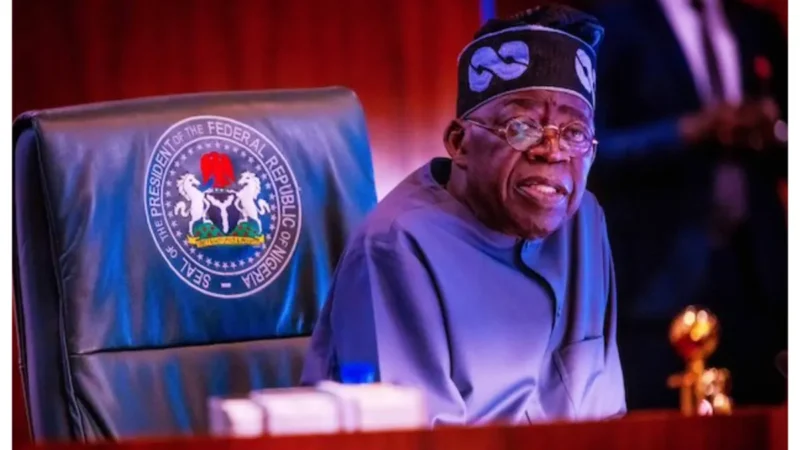
It is safe to say that Nigeria’s improved maritime security architecture and reforms in the Gulf of Guinea played a decisive role in restoring global confidence. This move earned NIMASA presidential commendation, as President Bola Tinubu formally commended the agency’s management, describing the achievement as a strong affirmation of Nigeria’s growing influence in global maritime governance.
In June 2025, at the Day of the Seafarer celebration in Port Harcourt, the Federal Government launched the Maritime Labour e-Platform, a digital solution for transforming labour administration. Building on the 2022 dockworkers registration initiative, the platform creates an integrated system for registering and verifying seafarers, dockworkers, employers, and other stakeholders. Speaking at the event, NIMASA’s Executive Director for Maritime Labour and Cabotage Services, Jibril Abba, was quoted as saying, “By centralising registration and issuing secure biometric identity cards, it cuts paperwork, speeds up processing, and gives us reliable real-time data.”
The platform fulfils NIMASA’s statutory mandate under Section 27(1)(a) of the NIMASA Act 2007 and aligns Nigeria with the Maritime Labour Convention 2006, the Seafarers’ Bill of Rights.
While building capacity and modernising systems, Mobereola has demonstrated that NIMASA has the regulatory teeth to enforce compliance. In January 2026, the agency launched ‘Operation Zero Tolerance for Non-Compliance’, targeting violations of Nigerian maritime laws. The operation requires comprehensive compliance, proper vessel registration, valid certifications, updated ownership documentation, adherence to Cabotage provisions, and timely payment of statutory levies. NIMASA’s enforcement strategy includes random and targeted vessel inspections, documentation verification against agency databases, and compliance assessments at ports, terminals, and offshore locations.
Beyond regulation, NIMASA has pursued strategic international collaborations, including a partnership with the Danish Maritime Authority to enhance maritime security through intelligence sharing, joint patrols, and capacity building. Similarly, collaboration with University College London implements emissions monitoring at Nigerian ports, contributing to global climate commitments. Working with the Infrastructure Concession Regulatory Commission, NIMASA is exploring public-private partnership models for major projects, including the Modular Floating Dock. At the UN Climate Change Conference in Baku, Mobereola presented Nigeria’s automatic identification system for ship emission calculation, demonstrating NIMASA’s environmental commitment.
He has been particularly vocal in challenging discriminatory War Risk Insurance premiums imposed on vessels calling at Nigerian ports. Under Mobereola’s leadership, NIMASA has made significant progress in removing obstacles to the Cabotage Vessel Financing Fund, with meaningful disbursement to indigenous shipowners anticipated in 2026. The agency demonstrated commitment by inaugurating the CVFF Application Portal in January 2026. Combined with the November 2025 accreditation of 27 shipyards, these developments create an ecosystem where Nigerian shipowners can both finance vessel acquisition and access local repair services.
Maritime stakeholders have expressed concern that Nigeria continues to incur War Risk Insurance premiums, a development that raises the cost of vessels calling at the country’s ports. The Head of Research at Sea Empowerment and Research Centre, Mr Eugene Nweke, in a chat with The PUNCH on Monday, lamented that “despite reported improvements, high international war-risk insurance premiums persist, indicating that global confidence recovery is still incomplete.”
“Despite reported improvements, high international war-risk insurance premiums persist, indicating that global confidence recovery is still incomplete. Several flagship initiatives remain at transitional or rollout stages; measurable economic outcomes are yet to fully materialise,” Nweke said.
According to Nweke, broader structural constraints within Nigeria’s maritime ecosystem continue to limit rapid transformation. A seasoned clearing agent, who gave his name as Timothy Michael, while commending the agency’s boosting of training for cadets, called on NIMASA to ensure adequate employment for the cadets